Website builder review
Dorik Review: AI Website Builder, Features, Limitations and Who It’s For
An editorial review of Dorik’s AI-assisted, no-code website-building workflow, its CMS and publishing tools, and the situations where another platform may fit better.
Affiliate disclosure: We may earn a commission if you purchase through links on this page, at no additional cost to you. Our editorial analysis is based on the criteria described in this guide.
Visit Dorik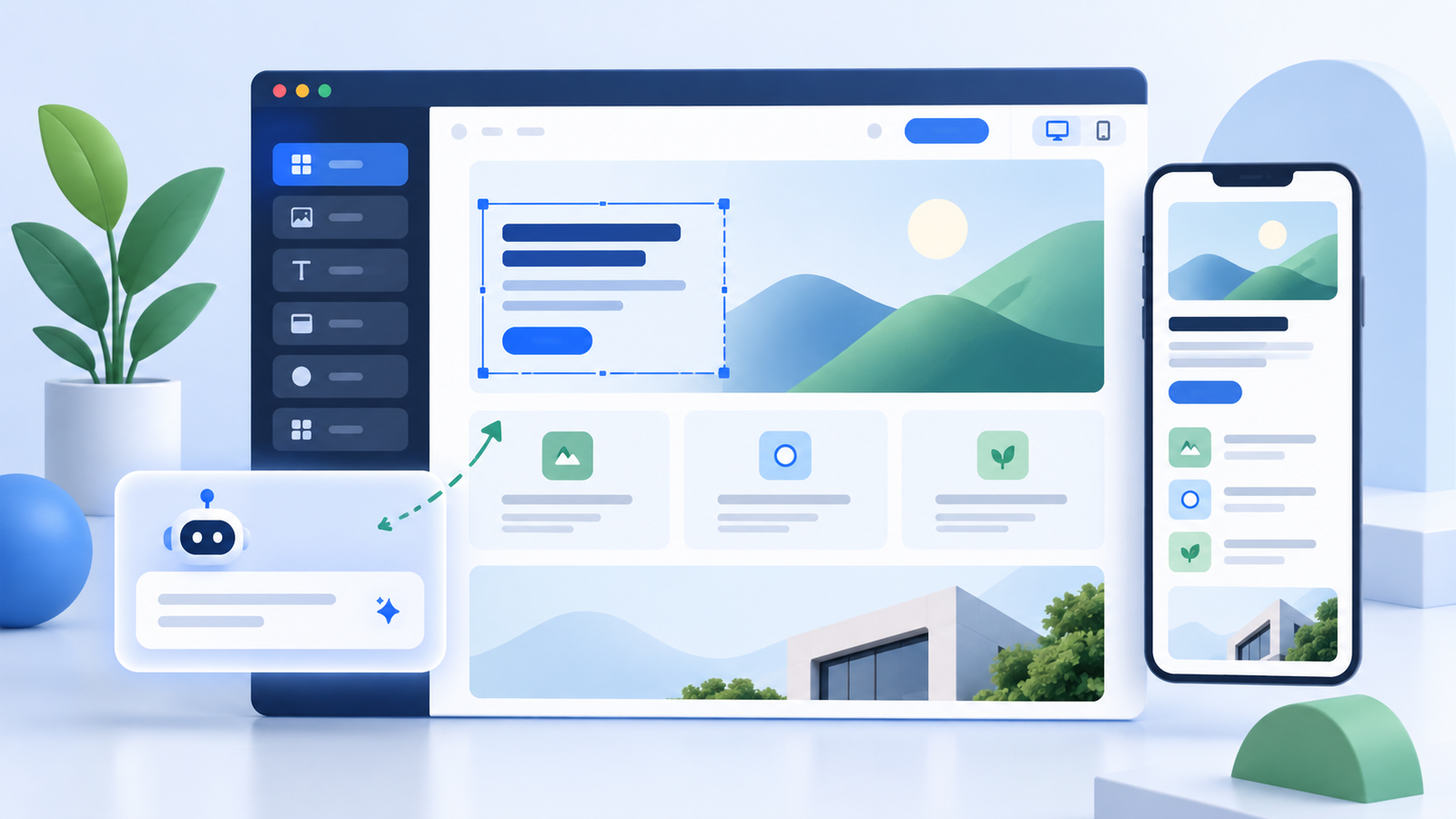
Introduction
Dorik is a website builder aimed at people who want to move from an idea to an editable site without starting with code. Its current product materials describe a prompt-led AI starting point alongside a visual editor, templates, CMS, blogging, hosting, and publishing tools. That combination can be useful when a small team needs a practical website workflow rather than a collection of separate services.
This review is about fit, not a universal winner. A generated first draft still needs accurate copy, accessible structure, images you are licensed to use, and a careful review before publishing.
Quick overview
| Consideration | Editorial take |
|---|---|
| Category | AI-assisted, no-code website builder |
| Best-fit use cases | Service sites, portfolios, content sites, directories, and client websites |
| Coding requirement | Not required for a basic visual workflow; custom code may matter for advanced needs |
| CMS availability | Dorik documents custom collections and dynamic templates |
| AI functionality | Prompt-led site, copy, and image-generation starting points that remain editable |
| Intended audience | Freelancers, creators, small businesses, and agencies evaluating a no-code workflow |
What is Dorik?
Dorik combines visual site construction with publishing infrastructure. Its feature documentation describes a WYSIWYG editor, responsive controls, a CMS, blogs, custom domains, hosting, forms, analytics integrations, and SEO settings. In practice, that makes it worth evaluating when the person maintaining the site also needs to update pages and content after launch.
The relevant question is not whether a builder can create a homepage. It is whether the editor, content model, and handoff process match how your business will operate six months later.
Dorik AI website builder
Dorik says its AI workflow can create a multi-page draft from a business description, including draft layout, copy, and images, then open that result in the visual editor. Treat that output as a starting brief: confirm claims, replace generic imagery, check mobile layouts, and make calls to action specific to the business. AI can reduce blank-page friction, but it cannot supply a business’s positioning or evidence.
Visual editor, CMS, and blogging
The visual editor is most useful when a team expects routine page changes without developer involvement. The CMS adds another layer for repeatable content such as articles, listings, locations, or case studies. Dorik’s blogging documentation also describes a rich-text workflow, drafts, scheduling, categories, authors, and RSS—details that matter more to a content site than a one-page launch.
For agencies, the deciding factor is often whether the content model is simple enough for a client handoff. For a directory or content-heavy site, test a representative collection and template before committing a full migration.
SEO, hosting, domains, forms, and integrations
Dorik documents per-page titles and descriptions, sitemap and redirect management, custom schema, and robots controls. These controls can support sound technical SEO, but they do not guarantee rankings; content quality, relevance, crawling, and competition still matter. Its product information also describes custom-domain connection, managed hosting, forms, and integrations with email and automation services. Confirm the settings and plan limits that apply to your intended setup before launch.
Who Dorik may be a good fit for
- Freelancers who need a presentable, editable service or portfolio site.
- Small businesses that want a straightforward site, lead capture, and room to publish content.
- Agencies exploring CMS, collaboration, and branded client workflows.
- Creators who prefer a visual workflow over maintaining a codebase.
Who may prefer another platform
Consider a different platform when your business needs a very specific commerce stack, a deep plugin ecosystem, a developer-owned application architecture, or an especially design-led canvas workflow. Compare the practical alternatives in Dorik vs Wix and Dorik vs Framer instead of assuming one tool fits every project.
Strengths and limitations
Strengths: a combined AI, visual editing, CMS, and publishing workflow; an approachable path for non-coders; and features that can support agency or content use cases.
Limitations: generated content needs human review; a visual builder may not replace a custom application stack; and plan-specific capabilities, integrations, and workflow details should be tested against your actual requirements.
Pricing considerations
Pricing and plan limits change. Review current inclusions, domain allowance, collaborator needs, CMS usage, and custom-code requirements before making a decision.
Final considerations
Dorik may be worth considering if you want AI to accelerate a no-code website starting point while retaining a visual editor and CMS for ongoing work. Use a small pilot site to test editing, publishing, forms, and content maintenance before committing a larger project.
FAQ
Can an AI-generated Dorik site be edited?
Dorik states that generated sites open in its visual editor, where layout, text, images, and sections can be refined. That editability is important, but review every generated detail before publishing.
Does Dorik guarantee Google rankings?
No. SEO controls help with implementation, but no website builder can guarantee rankings.
Is Dorik only for landing pages?
No. Dorik documents CMS and blogging capabilities as well. Whether those are sufficient depends on the complexity of your content model and workflow.